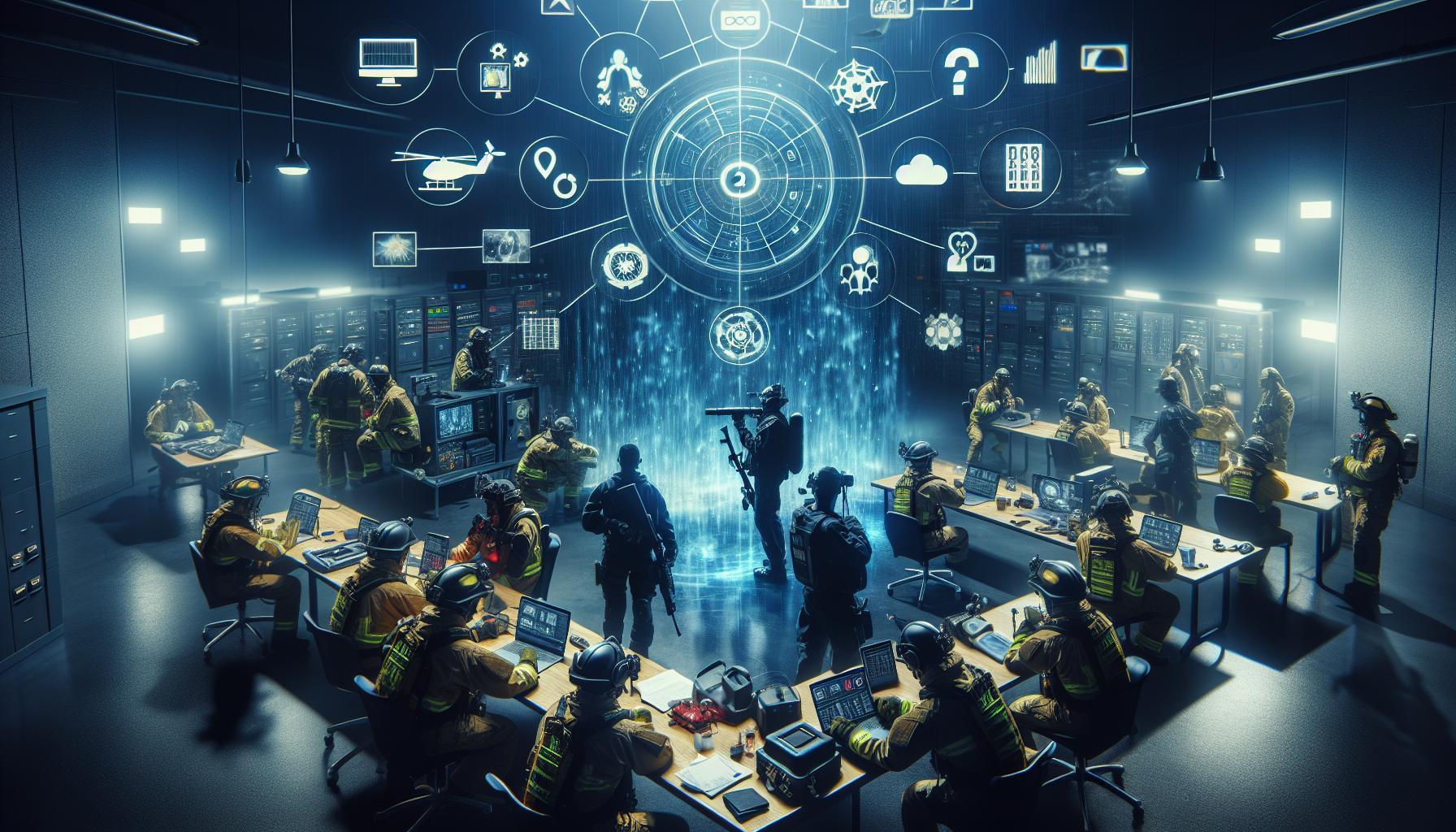
In the fast-paced world of emergency response, the effectiveness of incident action planning can mean the difference between chaos and coordination. Understanding the roles of general staff members within this framework is crucial. Their contributions enhance situational awareness and streamline operations, making proactive planning essential for successful outcomes in crisis management.
Certainly! Here are some H2 headings for your article “General Staff Member Roles in incident Action Planning and Awareness”:
In the dynamic world of incident management, understanding the pivotal roles of general staff members during action planning is crucial for success. Incident action planning is not just about responding to crises; it’s about harnessing the skills and coordination of various staff roles to create an effective response strategy. Each member contributes uniquely to the overall objective of ensuring safety, efficiency, and clarity during incidents.
Role of the Incident Commander
The Incident Commander (IC) leads the response team and is responsible for the overall incident management strategy. This vital role requires strong leadership skills and the ability to make fast decisions based on evolving situations. The IC coordinates efforts among diverse teams and communicates directly with stakeholders to maintain a clear viewpoint on the incident’s status and response needs.
Planning Section Chief: Strategy Developer
The Planning Section Chief plays a crucial role in the Incident action Planning process by developing the action plan based on situational reports and intelligence. They gather, analyze, and disseminate information to ensure that all operational aspects are covered. This position not only involves strategizing effective responses but also requires continuous updating of the action plan based on real-time developments.
Logistics Section Chief: Resource Management
Efficient resource allocation is vital in incident management, and the Logistics Section Chief is integral to this process. They manage all logistical support, including the procurement of equipment, personnel, and services necessary for the incident response. their role includes:
- Coordinating transportation: Ensuring that personnel and resources can reach the scene effectively.
- Resource tracking: Keeping detailed records of resources utilized, which aids in post-incident analysis.
- Establishing dialog lines: Facilitating open communication among staff and support teams.
Operations Section Chief: Tactical Implementation
the operations Section Chief translates the strategic plan into action. By overseeing all tactical operations during an incident,this role ensures that resources are deployed effectively. They supervise field operations, ensure safety protocols are followed, and provide updates to the Incident Commander, ensuring a seamless flow of information and decisions.
| Role | Main Responsibilities |
|---|---|
| Incident Commander | Overall leadership and decision-making |
| Planning Section Chief | Action plan growth and updates |
| Logistics Section Chief | Resource management and support |
| Operations Section Chief | Tactical implementation of the plan |
Understanding the specific roles of general staff members in incident action planning enhances teamwork, improves response efficiency, and ultimately leads to better outcomes during emergencies. By recognizing the contributions of each position, organizations can foster a culture of preparedness and resilience.
understanding Incident Action Planning: A Collaborative Approach
Effective incident action planning is the backbone of any successful emergency response. It hinges on collaboration among various team members, transforming individual roles into cohesive strategies that not only address immediate challenges but also enhance overall situational awareness. By understanding the diverse and specialized functions of general staff members in incident action planning, teams can orchestrate a unified approach that empowers their response efforts.
Collaboration as the Core of Incident Action Planning
In the realm of incident action planning, collaboration goes beyond mere communication; it requires active engagement from all functional roles within the team.Each member plays a vital role, contributing unique perspectives and areas of expertise that enrich the planning process. the General Staff comprises four primary positions: the Incident Commander, Operations Section Chief, Planning Section Chief, and Logistics Section Chief. Through their collaboration, thes roles can achieve greater efficiency and effectiveness in responding to incidents.
- Incident Commander: Responsible for overall incident management, ensuring that all aspects of the response align with strategic objectives.
- Operations Section Chief: Focuses on executing the response strategy, managing resources and tactical operation teams on the ground.
- Planning Section Chief: Gathers and analyzes information, supports decision-making, and prepares the Incident action Plan (IAP) to ensure operational efficiency.
- Logistics Section Chief: Manages the logistics of resource acquisition, providing necessary supplies and personnel to support operations seamlessly.
Enhancing Situational Awareness Through Structured Planning
Situational awareness is crucial during incidents; it enables teams to adapt their approaches based on evolving circumstances. A structured incident action planning process enhances this awareness by ensuring all decisions are informed and actionable. For instance, regular briefings among the General Staff can help disseminate vital information, reducing confusion and miscommunication. The Planning Section Chief collects data not only from the field but also from previous incidents to foresee potential challenges and opportunities.
| Critical Component | General Staff Member Role | Actionable steps |
|---|---|---|
| Information Gathering | Planning Section Chief | Regularly evaluate and update situational reports to improve decision-making. |
| Tactical Operations | operations Section Chief | Implement tactical objectives based on complete IAPs. |
| resource Management | Logistics Section Chief | Establish systems for tracking resource allocation and status updates in real-time. |
By embedding these collaborative practices into the incident action planning cycle, general staff members strengthen their operational capabilities, fostering an surroundings where informed decisions lead to effective responses. This holistic approach ensures that all voices are heard and that the incident resolutions are both efficient and thorough, ultimately guiding teams toward successful incident management and enhanced public safety.Adopting such a collaborative mindset not only benefits individual roles in incident action planning but also elevates the entire response framework.
Key Responsibilities of General Staff Members in Emergency Scenarios
In the high-stakes environment of emergency response, the clarity and organization of a team’s actions can be the difference between chaos and order.General Staff Members play crucial roles in incident action planning and situational awareness, ensuring that every response is strategic and effective. Understanding their responsibilities in such scenarios is vital for cohesive operations.
Coordination and Communication
Effective communication is at the heart of any successful emergency response. General Staff Members are responsible for maintaining open lines of communication among various teams and stakeholders. This includes regularly updating all parties on the progress of ongoing operations, changes in strategies, and any emerging threats. They must also facilitate information sharing, ensuring that operational data is disseminated to command staff and field personnel promptly.
- Establishing Communication Channels: Implementing reliable communication methods,such as radios,text messages,or digital platforms,to ensure everyone stays informed.
- Regular Briefings: Conducting frequent briefings to align team efforts with the overall incident action plan.
- Feedback Mechanisms: Setting up processes for frontline staff to provide feedback about what tactics are working and what challenges they face.
Resource Management
During emergencies, resource allocation can dictate the success of the response effort. General Staff Members are tasked with identifying,procuring,and managing vital resources such as personnel,equipment,and supplies. This requires a keen understanding of both the incident’s evolving needs and the available assets.
| Resource Type | Responsibilities | Example Actions |
|---|---|---|
| Personnel | Ensure optimal staffing for the incident response. | Assign roles based on skill sets; bring in additional support as needed. |
| Equipment | Manage the inventory and deployment of essential tools. | Track equipment usage and maintenance schedules. |
| Supplies | Oversee the procurement and distribution of necessary supplies. | Organize supply runs; ensure availability of first aid kits, water, and food. |
Operational Planning and Assessment
Another key duty is supporting the operational planning process. General Staff Members must be proactive in identifying potential risks and contingency plans. They should gather situational data to define objectives and contribute insights to incident action planning.This involves:
- Risk Assessment: analyzing the risks posed by the incident and proposing measures to mitigate them.
- Strategy Development: Working with command staff to create effective strategies that can be dynamically adjusted as new information emerges.
- Post-Incident Analysis: After incidents, conducting debriefs to evaluate the success of the response and identify areas for improvement.
Through these responsibilities, General Staff Members ensure that incident action planning and situational awareness remain robust and effective, enabling their teams to manage emergencies with confidence and precision.
The Importance of Situational Awareness in Incident Management
The ability to navigate complex and dynamic environments hinges on one crucial component: situational awareness. In incident management, particularly within the scope of General Staff Member Roles in Incident Action Planning and awareness, situational awareness can mean the difference between a coordinated response and chaotic disarray. It involves not only understanding the immediate conditions but also recognizing how those conditions interact with the broader operational landscape.
Understanding Situational Awareness
Situational awareness encompasses three critical levels: perception, comprehension, and projection.First, it involves accurately perceiving the current scenario—identifying key elements, such as hazards and resources, that are in play. General staff members, as part of their roles in incident action planning, must be adept at scanning their environment and communicating vital information to ensure that all team members are on the same page.
Comprehension builds on perception,requiring staff to interpret the significance of the data gathered. For example, if a fire incident is escalating, understanding the implications of wind direction, fuel sources, and response capabilities becomes paramount.When staff members can effectively assess what these factors mean in real time, they can make informed decisions more rapidly. Lastly, projection involves anticipating future events based on the current situation, vital for strategizing short and long-term actions in response to an incident.
Practical Implementation of Situational Awareness
Creating a robust situational awareness framework involves several actionable strategies:
- Regular Training: Conduct simulation exercises where staff must navigate hypothetical incident scenarios,enhancing their ability to maintain situational awareness under pressure.
- Effective Communication Channels: Establish clear lines of communication both vertically and horizontally within teams to share pertinent information swiftly.
- Utilization of Technology: Implement tools that provide real-time data visualization of the incident, enabling personnel to observe evolving situations more efficiently.
Real-world examples illustrate the critical role of situational awareness. During an emergency response, teams that effectively shared observations and insights were able to avoid miscommunication and missteps. In contrast, incidents where situational awareness faltered frequently enough led to inefficient responses, underscoring the need for ongoing vigilance and training in this area.
By fostering a culture that prioritizes situational awareness within General Staff Member Roles in Incident Action Planning and Awareness, organizations can considerably enhance their incident management effectiveness. Not only does this preparedness save time and resources during actual incidents, but it also builds a more resilient response team ready to tackle future challenges head-on.
Building Effective Communication channels Among General Staff
Effective communication among general staff members is not just beneficial; it is indeed a critical element of success in incident action planning and ensuring awareness. When every team member is aligned and informed, responses become swifter, more coordinated, and ultimately more effective. Let’s explore how to create and sustain robust communication channels within such teams.
Establish Clear Communication Protocols
Creating a structured communication framework is essential. Begin by defining who communicates what, to whom, and through which channels. As an example, designating specific roles—such as a communication lead or liaison officer—can streamline messages and minimize confusion. These leaders can serve as informational hubs, ensuring that critical updates flow seamlessly between the incident action planning teams and general staff.
- Daily briefings: Schedule short morning briefings to go over priorities, updates, and any changes in the incident action plan.
- Digital Platforms: Utilize project management tools like Trello or asana to keep everyone on the same page regarding tasks and responsibilities.
- Feedback Mechanisms: Implement regular check-ins or feedback forms to gather insights from general staff on communication effectiveness.
Utilize Technology for Real-Time Updates
In today’s fast-paced environment, leveraging technology is imperative for effective communication. Tools like instant messaging apps (e.g., Slack or Microsoft teams) can facilitate real-time updates and foster immediate interaction between team members. This not only enhances awareness but also encourages a culture of responsiveness.
| Tool | Use Case | Benefits |
|---|---|---|
| Slack | Team Collaboration | Instant messaging, file sharing, and integration with other tools |
| Microsoft Teams | Video Conferencing & Collaboration | Group calls, document editing, and meeting scheduling |
| Trello | Project Management | Helps track tasks and responsibilities visually |
foster an Open Culture of Communication
Creating an environment where team members feel comfortable voicing concerns and sharing ideas is vital for effective incident action planning. Encourage open discussions and set aside time for team members to share their observations or suggestions. This approach not only improves morale but also leads to innovative solutions during critical situations.
Engagement can also be enhanced through team-building activities and workshops focused on improving communication skills. These sessions can dramatically improve the cohesion and effectiveness of the general staff in responding to incidents.
cultivating effective communication channels among general staff members requires a well-thought-out strategy that encompasses clear protocols, the use of modern technology, and a supportive culture.By focusing on these elements, teams can respond more efficiently and effectively in situations requiring swift incident action planning and heightened awareness.
Roles and strategies for risk Assessment in Incident Planning
Risk assessment is a critical component of effective incident planning, as it helps to identify potential hazards and the strategies needed to mitigate those risks. In scenarios where quick decision-making can save lives or reduce property damage, understanding the diverse roles and responsibilities of general staff members becomes essential.By engaging systematically in risk assessment, teams can ensure that they are thoroughly prepared for any unexpected incidents that may arise.
Understanding Key Roles in Risk Assessment
General staff members play a pivotal role in the risk assessment process. Their involvement ranges from frontline risk identification to the implementation of safety measures. Each member should have a clear understanding of their responsibilities, which typically include:
- Observation and Reporting: Employees are frequently enough the first to notice potential hazards. Regular training on what to look for can empower them to report unsafe conditions immediately.
- Risk evaluation: Staff should be involved in assessing the severity and likelihood of identified risks based on standardized criteria.
- Implementation of Controls: General staff must understand how to implement safety measures, such as using personal protective equipment (PPE) or following safety protocols.
- Emergency Preparedness: Staff roles also include participating in drills and understanding the emergency action plans that respond effectively to incidents.
Strategies for Effective Risk Assessment
Effective risk assessment strategies enable staff to contribute meaningfully to incident planning. key approaches include:
- Regular Training: Conduct periodic training sessions to keep staff updated on risk assessment practices and the tools available for hazard identification.
- use of Risk Assessment Tools: Implement digital tools and software that can facilitate collaborative risk assessments and allow for real-time updates and adjustments.
- Incorporation of Feedback: Create a culture where feedback is valued, encouraging staff to share their experiences and insights on the risk assessment process.
- Multidisciplinary Teams: Form teams with varied expertise to evaluate risks from different perspectives, leading to a more comprehensive understanding of potential hazards.
Implementing these strategies helps to create a safer working environment by ensuring that all staff members are proactive in their approach to hazard identification and mitigation. Leveraging the expertise and observations of general staff members during the risk assessment phase not only enhances incident planning but also fosters a workplace culture focused on safety and preparedness. By intertwining their roles with comprehensive risk assessment strategies, organizations can enhance their overall resilience against potential incidents.
Training and Resources for General Staff Members: Enhancing Preparedness
Understanding the Critical role of General Staff Members
In the dynamic environment of incident management, general staff members are crucial for ensuring effective and streamlined operations. When a crisis occurs, the ability of these team members to execute their roles effectively can dramatically influence the outcome of the situation. By enhancing their preparedness through targeted training and resource availability, organizations can create a more resilient workforce ready to respond to any incident.
Training Opportunities and Resources
To equip general staff members with the necessary skills for incident action planning and awareness, a variety of training programs and resources are available. Regular participation in training sessions not only builds confidence but also ensures all team members are familiar with their responsibilities and can act decisively when time is of the essence.
- Online Courses: Many organizations offer free or low-cost online courses focusing on incident management and action planning.The Employment Development Department (EDD) provides access to various training programs specially tailored for job seekers, which can also be beneficial for enhancing preparedness among general staff members. Check their resources for comprehensive training options here [[1]].
- Workshops and Job Fairs: Engaging in workshops allows staff to practice real-life scenarios in a controlled environment. Participating in job fairs organized by the EDD can also expose staff to potential training providers and experts in the field here [[3]].
- Peer Learning and Networking: Collaboration with other organizations can provide valuable insights. Joining professional associations can facilitate networking opportunities and contribute to knowledge-sharing regarding best practices in incident management.
Implementing Actionable Steps
To ensure continual improvement and preparedness among general staff members, organizations should implement structured training plans:
| Step | Description | Frequency |
|---|---|---|
| Initial Training | Introduce general staff members to the basics of incident action planning and their specific roles. | Once a year |
| Refresher Courses | Provide updates on procedures and policies to keep staff informed of changes. | Quarterly |
| Simulations | Conduct practice drills to enhance the practical application of their training. | Biannually |
By committing to these training initiatives, organizations can ensure that all general staff members are well-prepared for their roles in incident action planning. Encouraging continuous education and adaptation will not only enhance individual performance but also foster a cohesive and efficient team able to navigate crises effectively.
Coordination and Leadership: Fostering Teamwork During Incidents
Effective coordination and leadership during incidents can dramatically influence the outcome of crisis management efforts. When teams are faced with high-pressure situations, the roles that general staff members assume in incident action planning and awareness become crucial in fostering a united and efficient response. A clear understanding of these roles not only enhances operational effectiveness but also cultivates a culture of teamwork and collaboration that can lead to meaningful outcomes during incidents.
Understanding Roles in Coordination
Each general staff member plays a vital role in ensuring that all facets of incident management are addressed.This involves clearly defined responsibilities that align with the structure of the incident command system. By establishing well-defined roles, you can prevent confusion and overlap that frequently enough arises during high-stress situations. Below are the primary roles typically identified within the context of incident action planning:
- Incident Commander: Directs all incident response activities, ensuring that objectives are met efficiently.
- public Information Officer: Communicates accurate information to the public and stakeholders, vital for maintaining transparency.
- Safety officer: Monitors safety conditions and develops measures for ensuring the safety of all personnel involved.
- Liaison Officer: Coordinates between the incident management team and other agencies or organizations.
Building a Cohesive Team Environment
For effective incident action planning and awareness, fostering a culture of teamwork is not merely beneficial; it is essential. To achieve this, encourage open lines of communication across all levels. Regular briefings and debriefings can provide a platform for information sharing, allowing all team members to contribute their insights and expertise. During these sessions, emphasize the importance of each individual’s role and how it fits within the larger framework of incident response, thus promoting a sense of ownership and accountability.
Practically,you can employ tools such as incident command posts and collaborative platforms to facilitate better information dissemination and task assignments. The following table outlines common tools used for enhancing coordination during incidents:
| Tool | Purpose | Benefits |
|---|---|---|
| Incident Command Post | Centralized area for decision making and coordination | Improved oversight and strategic resource allocation |
| Collaboration Software | Facilitates real-time communication and document sharing | Enhances team synchronization and reduces information silos |
| GIS Mapping Tools | Visual depiction of incident scenes and resource placements | Informs tactical decision making and situational awareness |
By integrating these tools within the framework of general staff member roles, teams can foster a robust environment of collaboration during incidents. Real-world applications, such as recent emergency management efforts in natural disasters, illustrate how structured coordination and defined leadership roles can lead to more effective, timely responses while reinforcing team spirit across diverse stakeholder groups.
evaluating and Adapting plans: The Ongoing Role of General Staff
In emergency management, the ability to continuously evaluate and adapt plans is paramount. the landscape during an incident is rapidly changing, influenced by new developments, evolving challenges, and unforeseen variables. A proficient general staff plays a crucial role in this dynamic environment,ensuring that incident action plans remain relevant,effective,and responsive to real-time conditions.
Continuous Assessment and Feedback Mechanisms
General staff members must engage in ongoing assessment of the incident action plan. This involves analyzing outcomes, identifying gaps, and implementing necessary modifications. By fostering a culture of feedback and proactive communication, teams can assess their strategies through:
- Debriefing sessions after each operational period to assess what worked and what didn’t.
- Situation reports that provide updates on incident evolution and resource allocation.
- Stakeholder engagement to gather perspectives from those directly impacted by incidents.
To illustrate, during wildfire response efforts, general staff might conduct evening briefings to discuss fire behavior changes that impacted previous action plans. This collaborative assessment allows them not only to adapt their strategies but also to prepare for the next operational cycle, ensuring that tactical deployments are timely and effective.
Utilizing Data for Informed Decision-Making
The role of data in incident action planning cannot be overstated. General staff members should leverage a variety of data sources to inform their adaptations effectively. This includes utilizing geographic information systems (GIS) for visualizing spread patterns, analyzing past incident statistics, and even monitoring social media for public sentiment and actionable insights.
| Data Source | Application |
|---|---|
| GIS Mapping | Identify high-risk areas and plan resource allocation accordingly. |
| Incident Statistics | Evaluate previous incidents to anticipate challenges and successes. |
| Social Media Monitoring | Gauge community sentiment and identify emerging issues in real-time. |
Equipping general staff with access to relevant and timely data empowers them to make informed decisions that can pivot the flow of an incident response effectively. By adapting action plans based on factual information rather than assumptions, the overall effectiveness of incident management increases significantly.
the ongoing role of general staff in incident action planning is not a static duty but a dynamic and iterative process. Through continuous evaluation and a strong dependence on real-time data, these teams can adeptly adjust their strategies. Delivering quality responses during emergencies is not just about concrete planning; it’s also about the responsive, agile adjustments that come from robust teamwork and communication.
Case Studies: Successful incident Coordination by General Staff Teams
Effective Coordination in Action: Real-World Outcomes
In the chaotic environment of emergency management,the success of incident response frequently enough hinges on the efficiency and effectiveness of coordination among General Staff teams. These groups play a critical role in Incident Action Planning (IAP) and situational awareness,allowing for swift and informed decision-making.A few remarkable case studies illustrate how well-executed General Staff roles can lead to successful incident management.
One notable example is the coordinated response during the 2018 wildfires in California. In this instance, the Planning Section Chief led a team that utilized a comprehensive IAP to manage resources, establish safety protocols, and ensure effective communication across all levels. The team employed advanced mapping technologies to provide real-time situational awareness, which allowed for quick adjustments to the tactical objectives based on shifting fire behavior. This proactive approach facilitated streamlined decision-making, ultimately minimizing property damage and ensuring the safety of local communities.
Another notable illustration occured during Hurricane Harvey in 2017. During the incident, the Logistics Section of the General Staff was tasked with overseeing resource allocation, including food, medical supplies, and shelter management. The team implemented a dynamic resource tracking system that allowed them to identify shortages and adjust supply routes in real-time. This adaptability not only improved resource delivery but also built trust within the affected communities, showcasing the effectiveness of General Staff coordination in high-stakes scenarios.
- Resource Allocation: Effective logistics planning to ensure timely delivery of essential supplies.
- Real-Time Decision Making: The use of technology to adapt quickly to changing situations.
- Community Engagement: Building trust through clear communication and responsive actions.
By leveraging best practices in General Staff member roles during incidents, organizations can significantly enhance their operational effectiveness. These case studies underscore the importance of structured incident action planning and the need for vigilant situational awareness, which are critical components for achieving successful outcomes in disaster response scenarios.understanding these roles and their implications in real-life contexts serves as a valuable blueprint for future incident management strategies.
Q&A
What is the role of a General Staff Member in Incident Action planning and Awareness?
A general Staff Member plays a crucial role in Incident Action Planning by collaborating with various teams to effectively execute the incident response. Their responsibilities include gathering information, strategizing objectives, and facilitating communications during emergencies.
Specifically, these members are integral to formulating the action plans that guide operations and the distribution of resources. By working under the incident Commander, they ensure that all aspects of incident management are coordinated efficiently. Additionally, they may conduct briefings and provide essential feedback to enhance situational awareness.
How do General Staff Member roles enhance incident awareness?
The roles of General Staff Members enhance incident awareness by maintaining clear channels of communication and providing timely updates to stakeholders. This ensures everyone is informed and can act decisively during incidents.
By establishing a structured flow of information, these staff members help in assessing situations rapidly and responding appropriately. Their ability to synthesize diverse inputs—from on-ground reports to intelligence data—allows for a comprehensive understanding of the incident landscape, ultimately improving the overall safety and effectiveness of the response.
Why is communication crucial for general Staff Members in incident planning?
Communication is vital for General Staff Members in incident planning as it ensures that all parties involved are aligned with the incident objectives. Clear communication reduces confusion and supports coordinated efforts during emergencies.
Effective communication helps in building a common operational picture, allowing for strategic decision-making. When teams are aware of their roles and responsibilities, it fosters teamwork and enhances the chances of successful incident management.Additionally,regular updates improve situational awareness,preparing leaders for potential changes or challenges.
Can I become a General Staff Member in incident action planning?
Yes, you can pursue a role as a General Staff Member in incident action planning.Typically, this requires relevant training and experience in emergency management or a related field.
Many organizations offer certifications and courses focused on incident management, such as those from the Emergency Management Institute. Gaining hands-on experience in emergency response exercises can also bolster your qualifications, making you a valuable asset in real-world situations.
What skills are essential for General Staff Members in incident action planning?
Essential skills for General Staff Members include effective communication, analytical thinking, and adaptability. These abilities are crucial for managing dynamic situations during incidents.
Furthermore, familiarity with incident management software and teamwork proficiency can significantly enhance your effectiveness. Understanding the principles of the Incident Command System (ICS) is also advantageous, as it provides a structured framework for roles, responsibilities, and processes in emergency management.
How do General Staff Members collaborate with Incident Commanders?
General Staff Members collaborate closely with Incident Commanders by providing operational support and feedback essential for strategic decision-making.This partnership ensures effective implementation of the incident action plan.
Through regular briefings and updates, they offer insights on resource allocations and operational challenges. Their direct communication with the Incident Commander fosters a responsive environment that can adapt quickly to evolving situations, enabling a cohesive and efficient emergency response.
What challenges do general Staff Members face in incident action planning?
General Staff Members often face challenges like information overload, coordination difficulties, and uncertainty during incidents. Navigating multiple inputs while maintaining clarity is crucial to effective incident action planning.
moreover, the fast-paced nature of incidents requires adaptability and quick decision-making. These challenges can be mitigated through training and the use of technology that streamlines communications and data management, as highlighted in many resources on emergency management.
Future Outlook
understanding the roles of general staff members in incident action planning and awareness is critical for effective emergency management. Each position—from the Incident Commander to the Planning, Operations, Logistics, and Finance/Governance sections—plays a vital role in ensuring a coordinated response. By fostering clear communication,defining responsibilities,and adhering to established protocols,teams can enhance situational awareness and operational efficiency during incidents.
We encourage you to delve deeper into the specific contributions of each general staff member and explore how their collaboration leads to successful outcomes in crisis situations. Engaging with this topic not only improves your knowledge but also empowers you to contribute more effectively in times of need.We welcome your thoughts and experiences, so feel free to share or ask questions as you continue your journey in incident management.